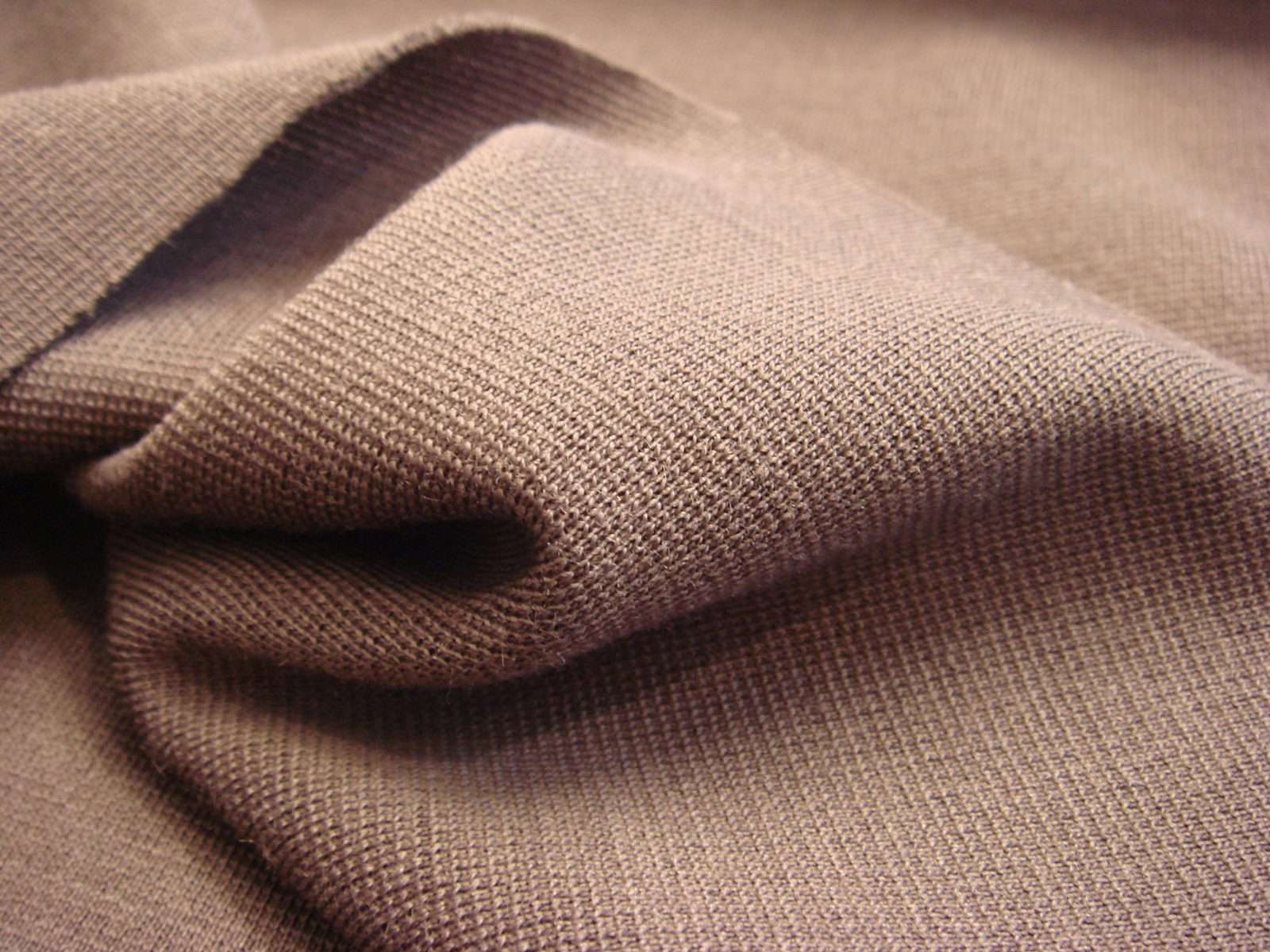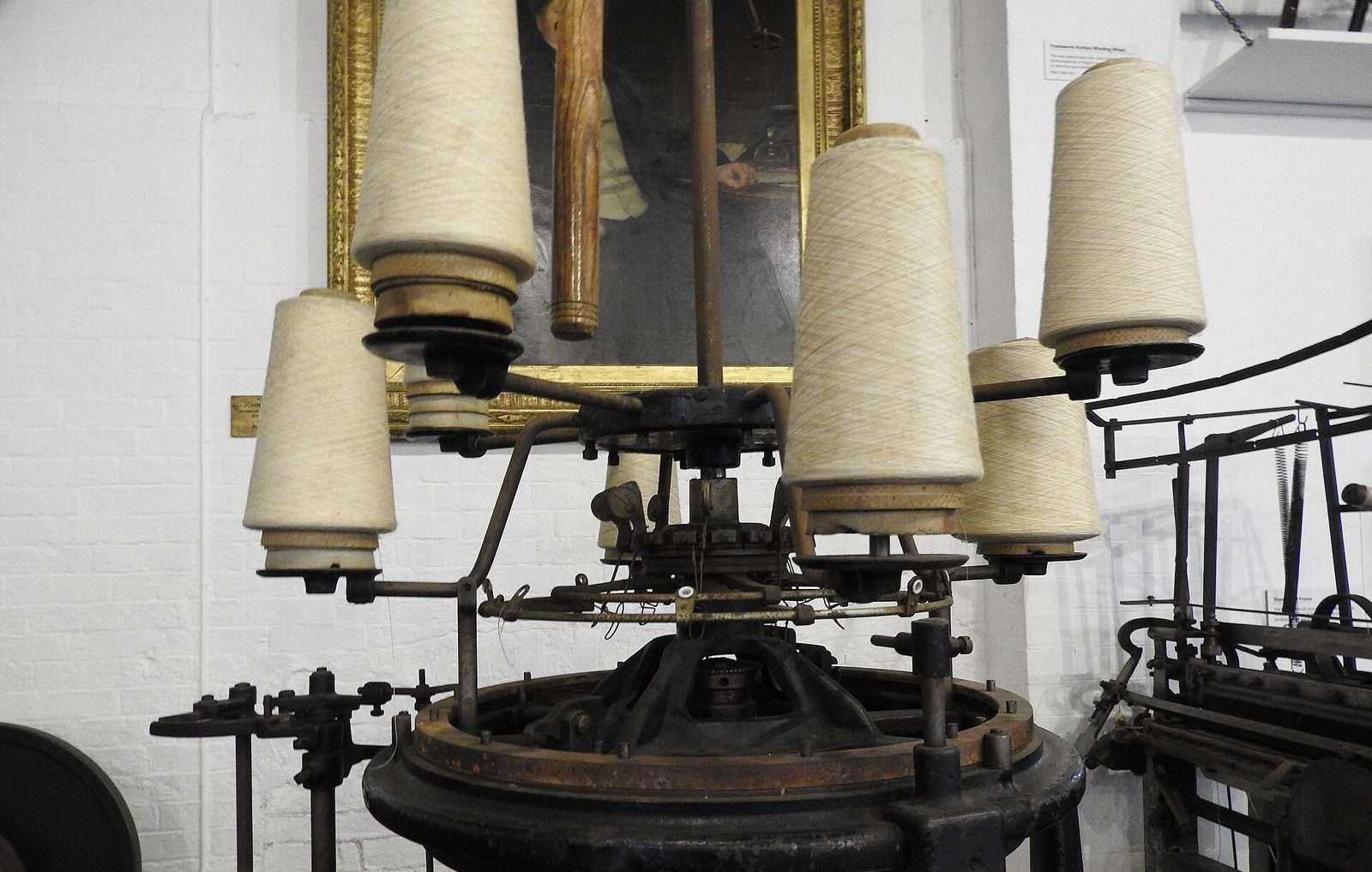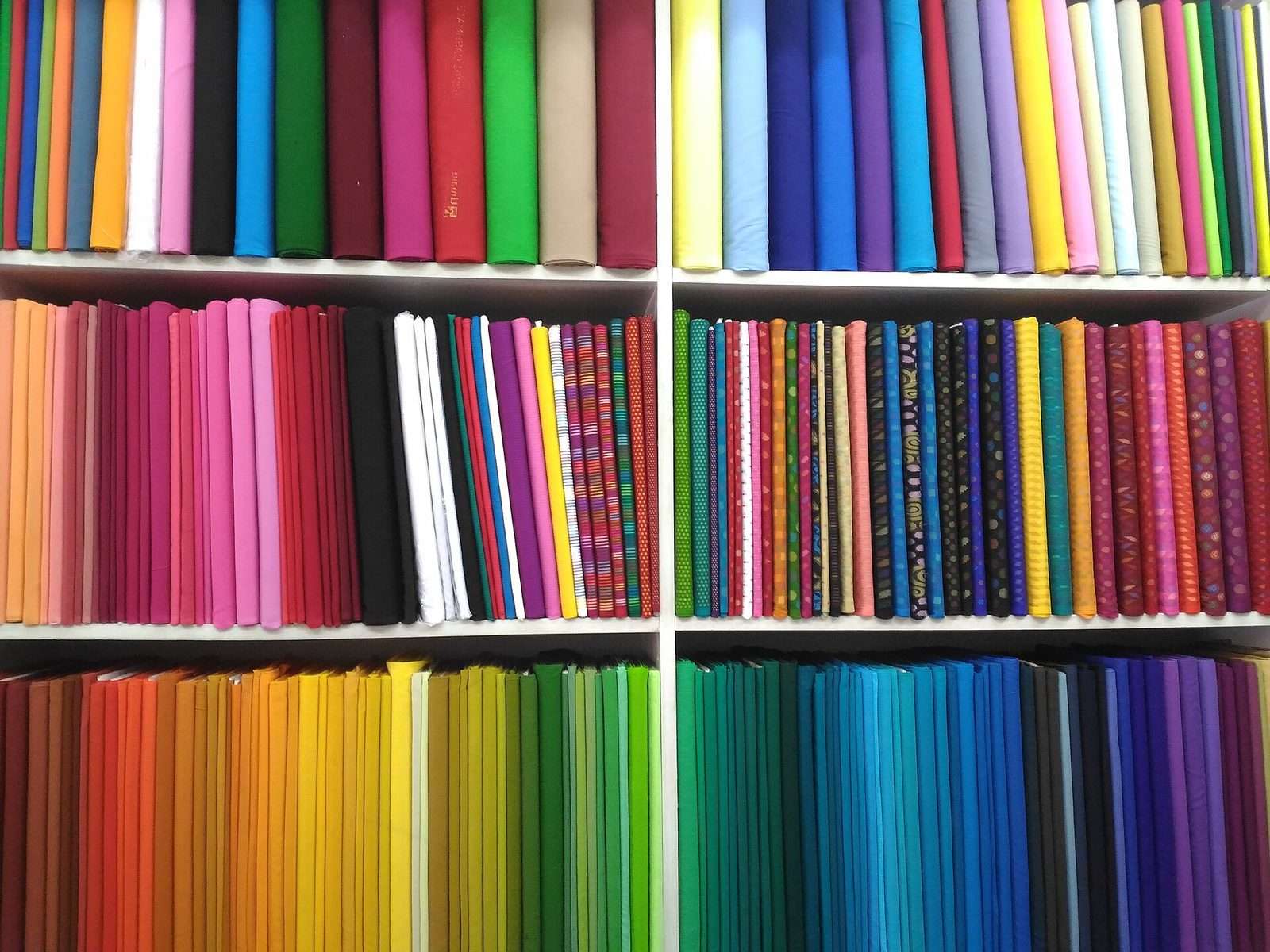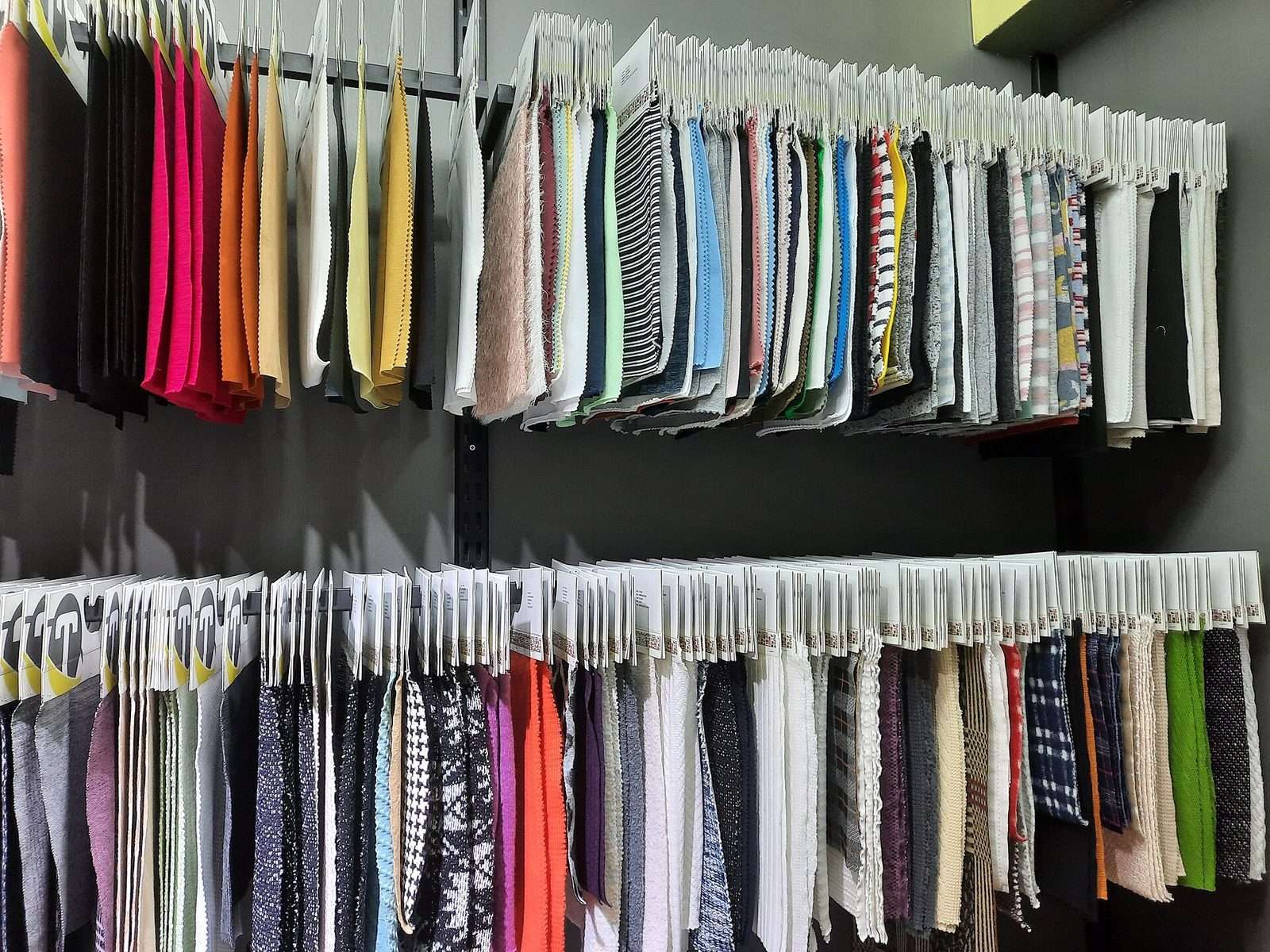
Four names dominate knitted fabric orders: single jersey, interlock, rib and piqué. All belong to the weft knitting family and can often be made from the same yarn, yet their constructions differ, so they do not behave alike. Choosing correctly changes both the look and the life of the garment.
Single jersey
Single jersey is knitted on one needle bed. The face is flat and the back shows loops, so the two sides differ. Light, fluid and economical, it is the main t-shirt fabric, usually worked between 140 and 200 g/m².
Its best known limit is edge curling: a cut edge rolls inwards. A single-bed structure also shrinks more than double-bed fabrics, so finishing and post-wash measurements are followed closely.
Rib
Rib is formed by alternating face and back wales, giving vertical channels and a similar look on both sides. Its defining property is high crosswise stretch with good recovery.
That makes rib indispensable for collars, cuffs and waistbands. It is produced in repeats such as 1x1 and 2x2; the wider the repeat, the wider the channel. Cashcorse is its fuller relative and can also serve as a body fabric. Rib does not curl at the edge.
Interlock
Interlock interlaces two rib structures. Both faces look flat, so the fabric can be used either way round. The double-bed construction makes it fuller, more opaque and dimensionally more stable, usually between 180 and 260 g/m².
Because it does not curl, offers an even ground for printing and feels soft on the skin, it is chosen for underwear, babywear and premium basics. It consumes more yarn than single jersey, so it costs more.
Piqué
Piqué derives from the single-bed principle but creates a small textured, slightly perforated pattern on the surface. The texture adds visual character and improves air circulation. Its classic use is the polo shirt, and it is common in warm-weather and corporate garments; the textured face also shows creases less than a flat one.
A short comparison
- Single jersey: the lightest and most fluid, for t-shirts and summer garments; curls at the edge.
- Rib: the highest crosswise stretch, for collars, cuffs, waistbands and close-fitting garments.
- Interlock: the most stable and fullest surface, for underwear, babywear and printed basics.
- Piqué: a textured, breathable surface for polo shirts and corporate wear.
Product by product
A summer t-shirt starts with single jersey, while its collar and cuffs are most likely rib. Baby bodysuits and underwear favour interlock for shape retention and softness. Polo shirts classically use piqué. Sweatshirts step outside these four and use fleece structures.
Elastane, yarn type and finishing
The construction alone does not decide the result. Elastane raises stretch and recovery and improves shape retention in close-fitting garments. Combed yarn gives a smoother, less pilling surface, while carded yarn is more economical and more rustic. Finishing changes hand feel markedly: the same greige interlock feels like a different fabric after a softening finish than after compacting. So when describing a fabric, add the weight, yarn and finishing expectations next to the construction name.
Meyas Tekstil produces all of these constructions on its own machine park in Kahramanmaraş. We propose the construction that suits your product, verify target weight and width on the sample and follow the measurements with our own team throughout production. If you are unsure which structure fits, send us your product type through the quote form and we will review the closest alternatives together.
Next step
Shall we develop the right fabric for your product?
Share your target weight, width and end use; we will get back with suitable constructions and sample options.
Request sample / quote ↗